Artificial Landscapes
About the project
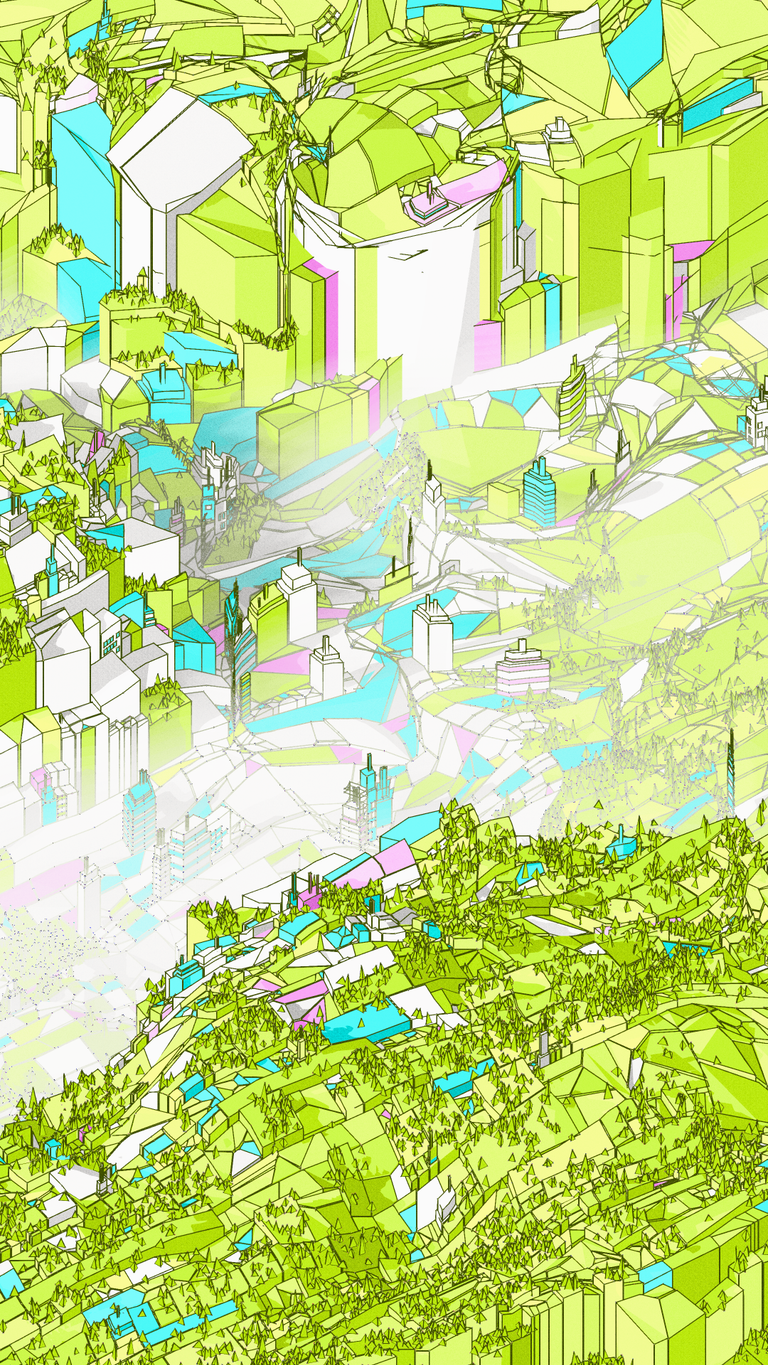
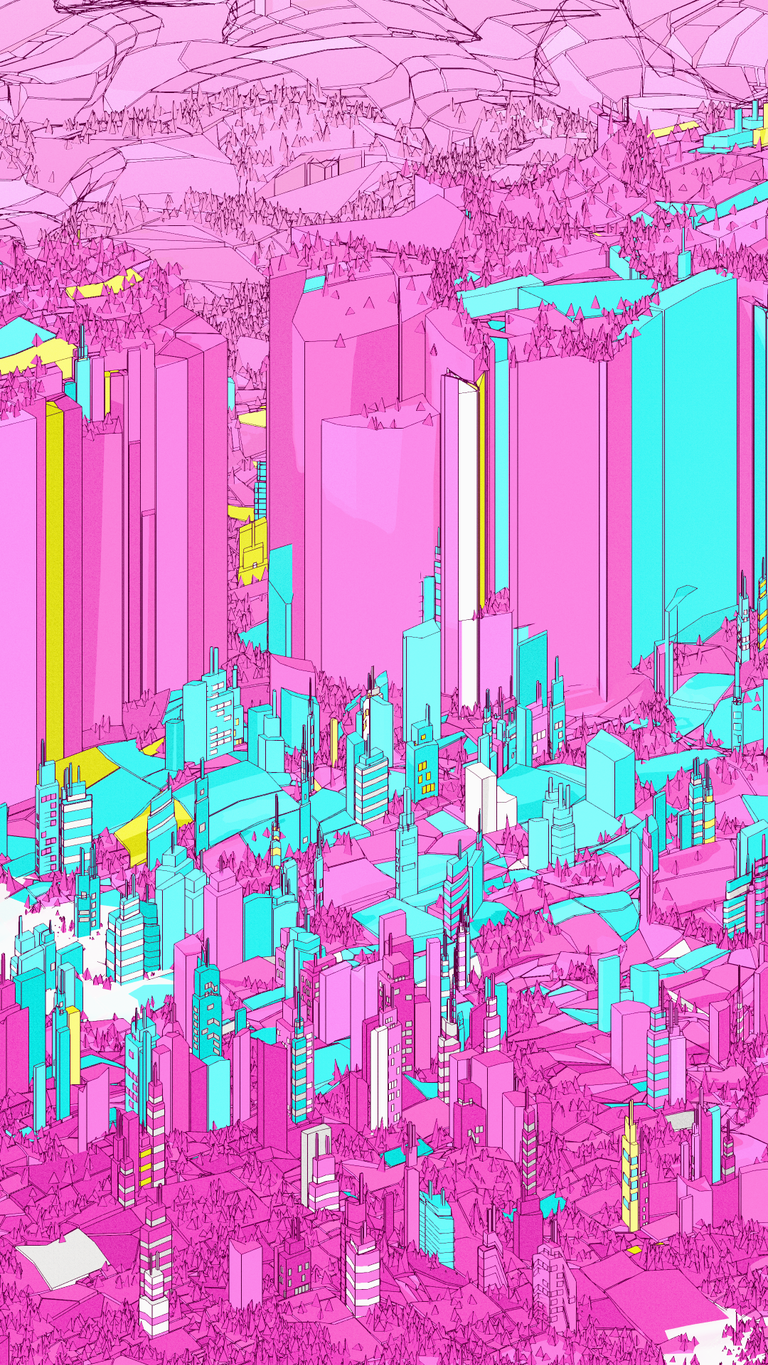
Artificial Landscapes is an exploration of the relationship between natural landscapes and their artificial counterparts, such as architecture and urbanism.
Although these two domains are often seen as distinct, they are deeply interconnected, and can affect each other in multiple ways. This interconnection raises questions: Where do we draw the line between what is natural and what is artificial?
This piece illustrates how even a slight change in a small set of variables can result in vastly different artificial landscapes. It invites us to consider how this concept may also apply to our physical world, where seemingly minor alterations can have significant consequences.
The use of open form generative art allows for a deeper exploration of this idea. It invites the viewer to consider the relationship between change and diversity in our environments, and the effect that each variable may have.
Evolution
In Artificial Landscapes, evolution takes form as rising water and smog. With each step, the level increases, with no upper limit. Some terrains resist longer, others shift early.
Here are levels 0, 5 and 12:

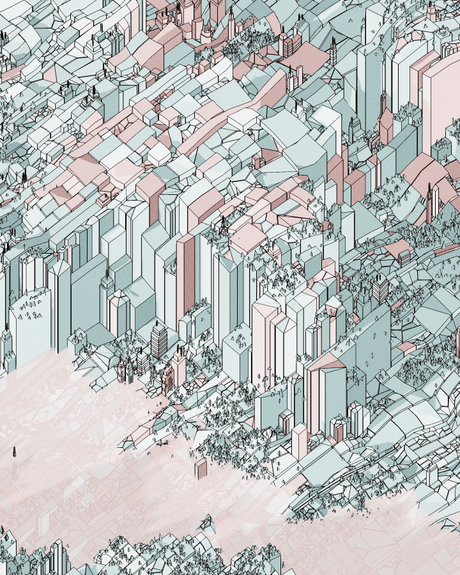
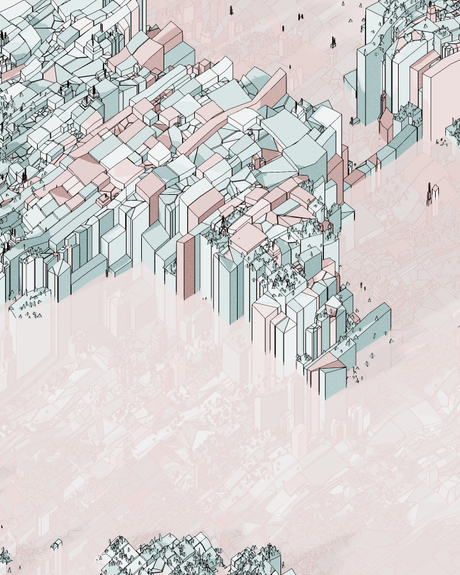
As you descend deeper, the world becomes more enigmatic. Entire scenes may vanish beneath haze or water.
But this is an artificial world. You can always reroll, seeking clarity, or embracing mystery.

Each landscape inherits traits from its past, but new mutations are introduced at every step.
What remains? The core color palette, tying each landscape to its lineage.
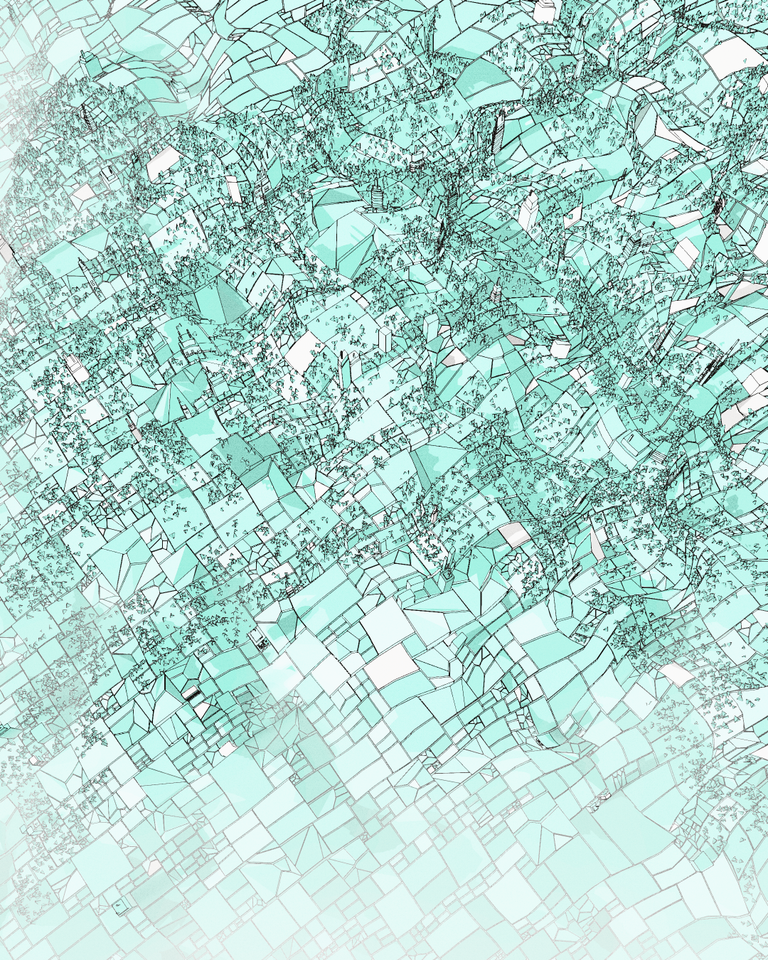
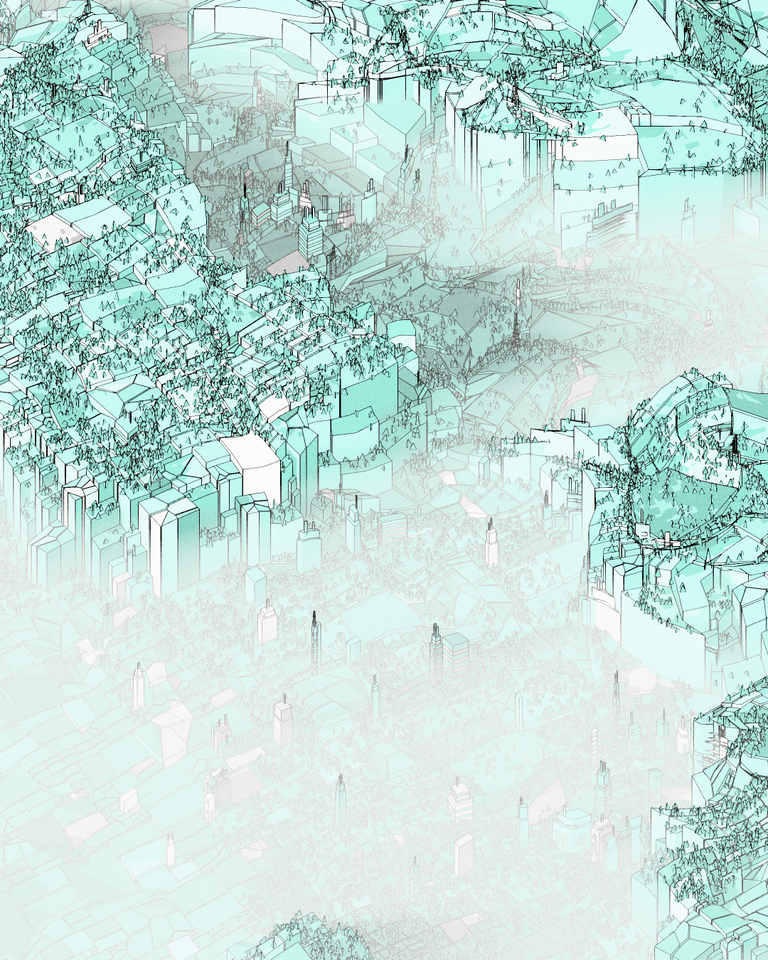
From quiet valleys to flooded ruins, the diversity is vast. And sometimes, a small act, like rerolling, is all it takes to find an environment that resonates.